
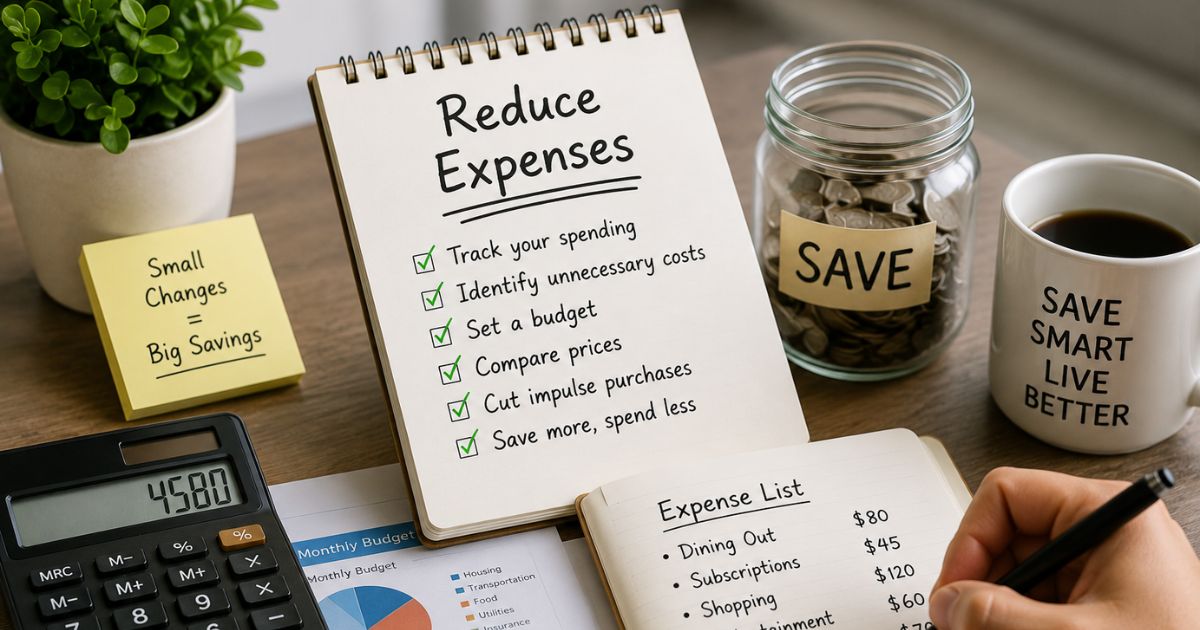

Financial stress affects millions of people regardless of income level. Whether you’re a student managing tight budgets, a business owner protecting profit margins, or someone trying to build savings, learning to reduce expenses creates breathing room in your finances. This isn’t about deprivation or extreme frugality—it’s about making smarter decisions that align your spending with your actual priorities. You’ll discover 47 tested strategies organized by category, from daily habits to major financial decisions, each designed to create measurable savings without diminishing your quality of life.
Understanding Your Current Spending Patterns
Before cutting expenses, you need clarity on where your money actually goes. Most people underestimate spending in certain categories by 20-30%.
Track every expense for 30 days:
- Use a budgeting app like Mint, YNAB, or a simple spreadsheet
- Record cash transactions immediately
- Review bank and credit card statements weekly
- Categorize spending into fixed costs, variable expenses, and discretionary purchases
Calculate your true hourly rate. Divide your monthly take-home income by the hours you work. When considering a purchase, ask: “Is this worth X hours of my time?”
Identify spending triggers. Do you shop when stressed? Order takeout when tired? Recognizing emotional spending patterns helps you address root causes rather than symptoms.
Housing: The Biggest Opportunity for Savings
Housing typically consumes 25-35% of income, making it the highest-impact category for expense reduction.
Rent and Mortgage Strategies
For renters:
- Negotiate rent renewal before signing. Landlords often prefer keeping good tenants over finding new ones.
- Consider a roommate to split costs. Even temporarily, this can accelerate debt payoff or savings goals.
- Move to a less expensive neighborhood or smaller unit. Calculate the actual cost difference including transportation.
- Offer property maintenance or management tasks in exchange for reduced rent.
For homeowners:
- Refinance if rates have dropped 0.75% or more since your original mortgage
- Challenge your property tax assessment (30-60% of appeals succeed)
- Remove private mortgage insurance once you reach 20% equity
- Make bi-weekly payments instead of monthly to save interest
Utility Cost Reduction
Electricity and gas:
- Install a programmable thermostat (saves $180 annually on average)
- Lower water heater temperature to 120°F
- Switch to LED bulbs (75% less energy than incandescent)
- Seal air leaks around windows and doors
- Unplug devices not in use; phantom power costs $100-200 yearly
Water:
- Install low-flow showerheads and faucet aerators
- Fix leaks immediately (a dripping faucet wastes 3,000 gallons annually)
- Run dishwashers and washing machines only when full
- Consider collecting rainwater for outdoor use
Home Maintenance
Preventive maintenance costs less than emergency repairs. Create a seasonal maintenance schedule for HVAC systems, gutters, and appliances.
Food and Groceries: Daily Savings That Compound
Food represents 10-15% of most household budgets and offers significant flexibility.
Strategic Shopping
Before shopping:
- Plan meals for the week based on what you already have
- Create a detailed shopping list and stick to it
- Eat before shopping to avoid impulse purchases
- Check store apps for digital coupons
At the store:
- Buy generic brands (typically 20-40% cheaper with similar quality)
- Purchase seasonal produce when prices are lowest
- Buy staples in bulk but only items you’ll actually use
- Compare unit prices, not package prices
- Shop perimeter aisles where whole foods are located
Timing matters:
- Shop early morning or late evening for markdown stickers on perishables
- Visit stores on discount days (many mark down meat on Mondays)
- Stock up during holiday sales (canned goods before Thanksgiving, grilling items before Memorial Day)
Meal Preparation Strategies
Batch cooking saves both money and time:
- Prepare meals on weekends for the entire week
- Cook double portions and freeze half
- Use a slow cooker or instant pot for inexpensive cuts of meat
- Transform leftovers into new meals (roast chicken becomes soup, then casserole)
Reduce restaurant spending:
- Limit eating out to once weekly as a treat
- Pack lunch instead of buying ($2,500 annual savings for daily lunch buyers)
- Make coffee at home ($1,200 annual savings for daily coffee shop visitors)
- When dining out, skip beverages and order water
Food Waste Prevention
The average household wastes $1,500 worth of food yearly.
- Store produce properly to extend freshness
- Use apps like TooGoodToGo for discounted restaurant surplus
- Freeze items before they spoil
- Learn to use vegetable scraps for stock
- Understand “sell by” versus “use by” dates
Transportation: Second Largest Budget Category
Transportation often costs 15-20% of income. Small changes create significant savings.
Vehicle Ownership Costs
Purchase decisions:
- Buy used vehicles 2-3 years old (avoid steepest depreciation)
- Choose reliable models with lower insurance and maintenance costs
- Pay cash when possible to avoid interest charges
- Research total ownership costs, not just purchase price
Maintenance and fuel:
- Follow the manufacturer’s maintenance schedule precisely
- Keep tires properly inflated (improves fuel economy 3%)
- Remove excess weight from vehicles
- Use gas price comparison apps
- Combine errands into single trips
- Drive smoothly—aggressive driving reduces fuel economy by 33%
Insurance optimization:
- Shop rates annually from at least three companies
- Increase deductibles if you have emergency savings
- Bundle home and auto insurance
- Ask about low-mileage discounts
- Remove collision coverage on vehicles worth under $3,000
Alternative Transportation
Consider car-free or car-light living:
- Use public transportation (monthly passes cost far less than car ownership)
- Bike or walk for trips under two miles
- Carpool with colleagues
- Use car-sharing services for occasional needs
- Negotiate remote work to eliminate commuting costs
Calculate true transportation costs: Include payment, insurance, fuel, maintenance, registration, and parking. The total often exceeds $9,000 annually per vehicle.
Student-Specific Expense Reduction
Students face unique financial challenges with limited income and substantial expenses.
Educational Costs
Textbooks and materials:
- Rent textbooks instead of buying (saves 50-80%)
- Check library copies for reserve reading
- Buy previous editions when content hasn’t changed significantly
- Form study groups to share resource purchases
- Sell books immediately after semester ends for best return
Tuition management:
- Take maximum credits if tuition is flat-rate
- Complete general education at community college
- Apply for every scholarship, no matter how small
- Work as a teaching assistant for tuition waivers
- Graduate on time—each extra semester costs thousands
Student Living Expenses
Housing:
- Live at home if feasible
- Become a resident advisor for free housing
- Share small apartments rather than paying for individual space
- Choose housing within walking distance to save transportation costs
Technology:
- Use free student software licenses
- Access library computers and printers
- Buy refurbished electronics
- Share streaming service accounts
- Use campus wifi instead of personal internet
Social activities:
- Attend free campus events
- Use student discounts everywhere (always ask)
- Host potluck gatherings instead of restaurant meetups
- Find free fitness through campus recreation centers
Business Expense Reduction Strategies
Businesses must balance cost-cutting with maintaining quality and growth.
Operational Expenses
Office and facilities:
- Negotiate lease terms or consider coworking spaces
- Implement remote work to reduce space requirements
- Conduct energy audits and implement recommendations
- Buy refurbished furniture and equipment
- Use virtual phone systems instead of traditional lines
Software and technology:
- Audit software subscriptions quarterly and cancel unused services
- Choose annual billing for 15-20% discounts
- Use open-source alternatives when appropriate
- Negotiate multi-year contracts for better rates
- Implement BYOD (bring your own device) policies with proper security
Supplies and inventory:
- Consolidate vendors to negotiate volume discounts
- Implement just-in-time inventory to reduce storage costs
- Go paperless wherever possible
- Buy generic office supplies
- Establish approval processes for purchases
Labor and Staffing
Optimize without layoffs:
- Cross-train employees for flexibility
- Use contractors for specialized short-term projects
- Implement intern programs with local colleges
- Automate repetitive tasks
- Review overtime patterns and adjust scheduling
Professional services:
- Bring basic tasks in-house (bookkeeping, social media)
- Use legal document templates when appropriate
- Compare proposals from multiple service providers
- Negotiate retainer agreements for regular services
Marketing and Growth
Cost-effective marketing:
- Focus on organic social media before paid advertising
- Develop email marketing (highest ROI channel)
- Create referral programs leveraging existing customers
- Partner with complementary businesses for co-marketing
- Track ROI meticulously and cut underperforming channels
Banking and Financial Services
Financial fees are completely avoidable expenses.
Account Management
Choose the right accounts:
- Use credit unions or online banks with no monthly fees
- Maintain minimum balances to avoid charges
- Link checking and savings for overdraft protection
- Set up account alerts to monitor balances
Eliminate fees:
- Use in-network ATMs exclusively
- Opt for paperless statements
- Set up direct deposit for fee waivers
- Review statements monthly for unexpected charges
Debt Management
Credit cards:
- Pay full balances monthly to avoid interest
- Transfer balances to 0% promotional cards
- Negotiate lower interest rates (success rate over 50%)
- Avoid cash advances with high fees
Loans:
- Refinance high-interest debt
- Make extra principal payments to reduce interest
- Consolidate multiple loans for simplified payment and potentially lower rates
Insurance: Necessary Protection, Unnecessary Costs
Insurance is essential, but most people overpay.
Coverage Optimization
Health insurance:
- Choose the right plan type for your usage patterns
- Use HSAs for triple tax advantages
- Compare marketplace options annually
- Utilize preventive care to avoid expensive treatments
- Ask for generic prescriptions
- Use telemedicine for minor issues
Life insurance:
- Buy term life instead of whole life (10x cheaper for same coverage)
- Purchase coverage directly from companies, not through agents
- Reassess coverage as dependents become independent
- Ensure employer coverage meets your needs before buying supplemental
Disability and other policies:
- Coordinate coverage between employer and private policies
- Increase deductibles if financially stable
- Bundle policies for multi-policy discounts
- Drop coverage you no longer need (wedding insurance after the wedding)
Entertainment and Lifestyle
Enjoyment doesn’t require excessive spending.
Subscription Management
The average household pays for 12+ subscriptions, many forgotten.
Audit and optimize:
- List every recurring subscription
- Cancel services you haven’t used in 30 days
- Rotate streaming services monthly instead of keeping all simultaneously
- Share family plans with trusted contacts
- Use free trials strategically, setting cancellation reminders
Recreation and Hobbies
Free and low-cost alternatives:
- Use library cards for books, movies, audiobooks, and museum passes
- Attend free community events and festivals
- Explore local parks and nature areas
- Take advantage of free days at museums and attractions
- Join community groups focused on your interests
Hobby expenses:
- Buy used equipment while learning new activities
- Borrow specialized tools from tool libraries
- Watch free tutorials instead of paid classes
- Participate in swap meets for hobby supplies
Clothing and Personal Care
Wardrobe management:
- Buy classic styles that don’t quickly date
- Shop end-of-season sales for next year
- Learn basic repairs (buttons, hems)
- Use clothing rental for special occasions
- Organize closet to see what you own and avoid duplicate purchases
Personal care:
- Cut hair less frequently or learn self-trimming
- Buy salon products online at discount retailers
- Make DIY versions of expensive beauty products
- Split professional services (cut at salon, color at home)
Technology and Communications
Technology costs have multiplied but also offer savings opportunities.
Phone and Internet
Mobile phone:
- Switch to MVNOs (mobile virtual network operators) using major networks at 40-60% less
- Buy phones outright and use them 3+ years
- Choose unlimited data only if you actually use 20+ GB monthly
- Use wifi calling to reduce plan requirements
- Share family plans with extended family or friends
Internet service:
- Call annually to negotiate lower rates
- Remove unnecessary speed tiers (most people don’t need gigabit)
- Own your modem and router instead of renting
- Bundle services only if you need all components
Streaming optimization:
- Rotate services instead of maintaining all simultaneously
- Share accounts within terms of service
- Use ad-supported free tiers when available
- Cancel during content droughts between favorite shows
Electronics and Devices
Smart purchasing:
- Buy previous generation models at significant discounts
- Purchase certified refurbished from manufacturers
- Wait for major sale events (Black Friday, Prime Day)
- Sell old devices immediately while they retain value
- Repair rather than replace when cost-effective
Seasonal and Holiday Expenses
Special occasions create budget pressure but offer planning opportunities.
Gift-Giving Strategies
Reduce costs while maintaining thoughtfulness:
- Suggest spending limits within friend and family groups
- Draw names for single gift exchanges instead of buying for everyone
- Give homemade gifts, experiences, or time
- Shop year-round when you find deals
- Use cashback apps and buy discounted gift cards
Holiday planning:
- Set firm budgets three months in advance
- Track spending against budget in real-time
- Avoid credit card debt by saving monthly
- Focus on traditions that don’t require spending
- Remember that presence matters more than presents
Vacation and Travel
Smart travel planning:
- Book flights 6-8 weeks in advance for domestic travel
- Use incognito mode when searching to avoid price increases
- Travel midweek and during off-peak seasons
- Choose accommodations with kitchens to reduce restaurant costs
- Use travel credit cards strategically for points and benefits
- Consider house-sitting or home exchanges
- Visit free attractions and natural areas
Healthcare Expenses
Healthcare costs are unavoidable but negotiable.
Medical Bills
Reduce costs legally:
- Always ask for itemized bills and review for errors
- Negotiate bills before payment (30-40% reductions possible)
- Ask about cash discounts for immediate payment
- Inquire about payment plans with zero interest
- Research fair prices using Healthcare Bluebook before procedures
- Get procedures done at outpatient facilities when appropriate
Prescription medications:
- Request generic versions automatically
- Use discount programs like GoodRx or RxSaver
- Compare prices between pharmacies (variation often 300%+)
- Ask doctors for samples
- Purchase 90-day supplies for maintenance medications
- Consider mail-order pharmacy options
Preventive approach:
- Focus on diet, exercise, and sleep to reduce future medical needs
- Use all preventive services covered at no cost
- Address minor issues before they become major problems
Building Sustainable Habits
Temporary expense cutting fails. Sustainable habits create permanent change.
Mindset Shifts
Reframe your relationship with money:
- View frugality as resourcefulness, not deprivation
- Focus on values-based spending
- Practice delayed gratification (30-day rule for non-essential purchases)
- Find satisfaction in saving rather than spending
- Recognize that experiences and relationships create happiness more than possessions
Automation for Success
Make saving effortless:
- Automate transfers to savings on payday
- Round-up programs that save spare change
- Auto-escalate retirement contributions
- Set spending limits on accounts
- Use separate accounts for different purposes
Accountability Systems
Stay on track:
- Review finances weekly, not just when problems arise
- Share goals with accountability partners
- Join online communities focused on financial independence
- Celebrate milestones
- Track net worth monthly to see progress
Common Mistakes When Reducing Expenses
Avoid these pitfalls that undermine savings efforts.
Cutting too much too fast. Extreme budgets create burnout and rebound spending. Make gradual sustainable changes.
Focusing only on small expenses. Making coffee at home helps, but negotiating rent saves dramatically more. Prioritize high-impact changes.
Ignoring quality. Buying the cheapest option often costs more long-term through replacements and repairs. Seek value, not just low prices.
Sacrificing health. Skipping preventive care, buying lowest-quality food, or eliminating stress relief creates expensive problems later.
Not tracking results. Without measuring, you don’t know what’s working. Track spending monthly to see progress and adjust strategies.
Forgetting to enjoy life. Balance is essential. Budget for joy while reducing waste.
Going it alone. Families need aligned goals. Discuss changes and involve everyone in solutions.
Expert Tips for Maximum Impact
Start with the big three. Housing, transportation, and food represent 60-70% of expenses. Small optimizations here create major savings.
Question recurring expenses most aggressively. A $10 monthly subscription costs $120 yearly and $1,200 over a decade. Recurring costs compound.
Use windfalls strategically. Tax refunds, bonuses, and gifts should accelerate savings goals, not increase lifestyle.
Implement the 24-hour rule. Wait one full day before any unplanned purchase over $50. Most impulses fade.
Calculate cost per use. A $300 item used 300 times costs $1 per use. A $30 item used once costs $30 per use. Quality items used frequently justify higher prices.
Leverage timing. Many expenses can be delayed strategically. Buy winter clothes in spring, summer items in fall.
Build a buffer. A small emergency fund prevents expensive solutions (payday loans, credit card debt) to unexpected problems.
Measuring Progress and Adjusting
Track specific metrics to ensure strategies are working.
Key Metrics to Monitor
Monthly expenses by category: Compare month-over-month and year-over-year to identify trends.
Savings rate: Calculate percentage of income saved. Aim to increase this quarterly.
Net worth: Assets minus liabilities. This comprehensive view shows real financial progress.
Spending per values category: Ensure money aligns with stated priorities.
Adjustment Schedule
Review finances on multiple timescales:
Weekly: Check spending against budget, address small issues.
Monthly: Categorize all expenses, calculate savings rate, adjust next month’s plan.
Quarterly: Evaluate which strategies are working, eliminate or modify ineffective approaches.
Annually: Major review of all fixed expenses, subscriptions, insurance policies, and investment strategies.
Long-Term Financial Benefits
Expense reduction creates cascading benefits beyond immediate savings.
Accelerated debt payoff: Redirecting saved money to debt elimination reduces interest paid and shortens payoff timelines.
Earlier retirement: Every dollar saved and invested compounds. Reducing expenses by $500 monthly and investing the difference for 30 years creates approximately $600,000 (assuming 7% returns).
Increased financial security: Lower expenses mean smaller emergency funds are adequate and job loss is less catastrophic.
Values alignment: Intentional spending creates satisfaction that mindless consumption never does.
Reduced stress: Financial margin eliminates constant worry and provides options.
Environmental benefits: Consumption reduction typically decreases environmental impact.
Frequently Asked Questions
How much should I aim to reduce my expenses?
There’s no universal target. Start by reducing expenses 10-15% in the first three months. Some people living above their means might need 30-40% reductions, while others already living efficiently might only find 5% in savings. Focus on progress, not perfection.
Which expenses should I cut first?
Begin with painless cuts—unused subscriptions, fees, and waste. Then tackle high-impact categories like housing and transportation. Save emotionally difficult changes for last, after building momentum and proving to yourself that expense reduction improves rather than diminishes life.
Will reducing expenses make me miserable?
Only if you cut randomly without considering your values. Strategic expense reduction eliminates waste while protecting what matters most to you. Most people report increased happiness after aligning spending with values, despite spending less overall.
How do I reduce expenses when I’m already struggling?
Start with immediate actions requiring no money: negotiate bills, eliminate subscriptions, reduce energy usage, and plan meals. Then focus on increasing income through side work, selling unused items, or asking for raises. Sometimes the equation needs both less spending and more earning.
What if my family won’t cooperate with expense reduction?
Include everyone in discussions about why reducing expenses matters and what goals it enables. Give family members choice within limits. Children can choose which subscriptions to keep within a budget. Partners can each have discretionary money spent without judgment. Cooperation comes from shared vision, not imposed restrictions.
How do I reduce expenses without giving up quality of life?
Focus on waste, not value. Most budgets contain substantial spending that provides little actual satisfaction—unused subscriptions, convenience purchases, impulse buys, and status spending. Eliminating these improves life while reducing costs. Simultaneously, protect spending that genuinely enhances your life, even if it seems frivolous to others.
Should I reduce expenses or focus on earning more?
Both. Expense reduction creates immediate results and builds habits of resourcefulness. Income increases take longer but remove ceilings on your financial potential. Most successful financial plans address both sides of the equation simultaneously.
How long does it take to see results from expense reduction?
Immediate changes like canceling subscriptions show results within one billing cycle. Housing and transportation changes might take 6-12 months to implement. Behavioral changes compound over time. Expect to see meaningful differences within 90 days and substantial results within a year.
What expenses should I never cut?
Don’t eliminate preventive healthcare, adequate insurance, quality food, professional development, or necessary mental health support. These investments prevent expensive problems. Also protect spending on relationships and activities that align with your core values—these create the quality of life that financial security is meant to support.
How do I reduce business expenses without harming growth?
Distinguish between investments and expenses. Cut waste aggressively but protect spending that generates revenue or improves products. Measure return on investment for every category. Sometimes spending more in strategic areas while cutting everywhere else accelerates growth more than across-the-board reductions.
Conclusion
Reducing expenses isn’t about self-denial—it’s about intentionality. Every dollar you spend represents hours of your life exchanged for money. Strategic expense reduction ensures those hours were traded for things that genuinely matter to you.
The strategies outlined here work across different life situations. Students can focus on educational costs and lifestyle adjustments. Business owners can optimize operations without sacrificing quality. Families can cut waste while protecting experiences that create memories.
Start with three changes this week. Cancel one unused subscription, negotiate one bill, and plan meals for five days. These small actions build momentum. Next week, tackle three more. Within 90 days, your financial situation will look substantially different.
The goal isn’t perfection. Some strategies will work brilliantly for your situation while others don’t fit. Experiment, measure results, and refine your approach. Financial health is a journey of continuous improvement, not a destination you reach and forget.
Your future self will thank you for every intentional decision you make today. The freedom, security, and options that come from living below your means—not because you have to, but because you choose to—create opportunities that excessive spending never can.